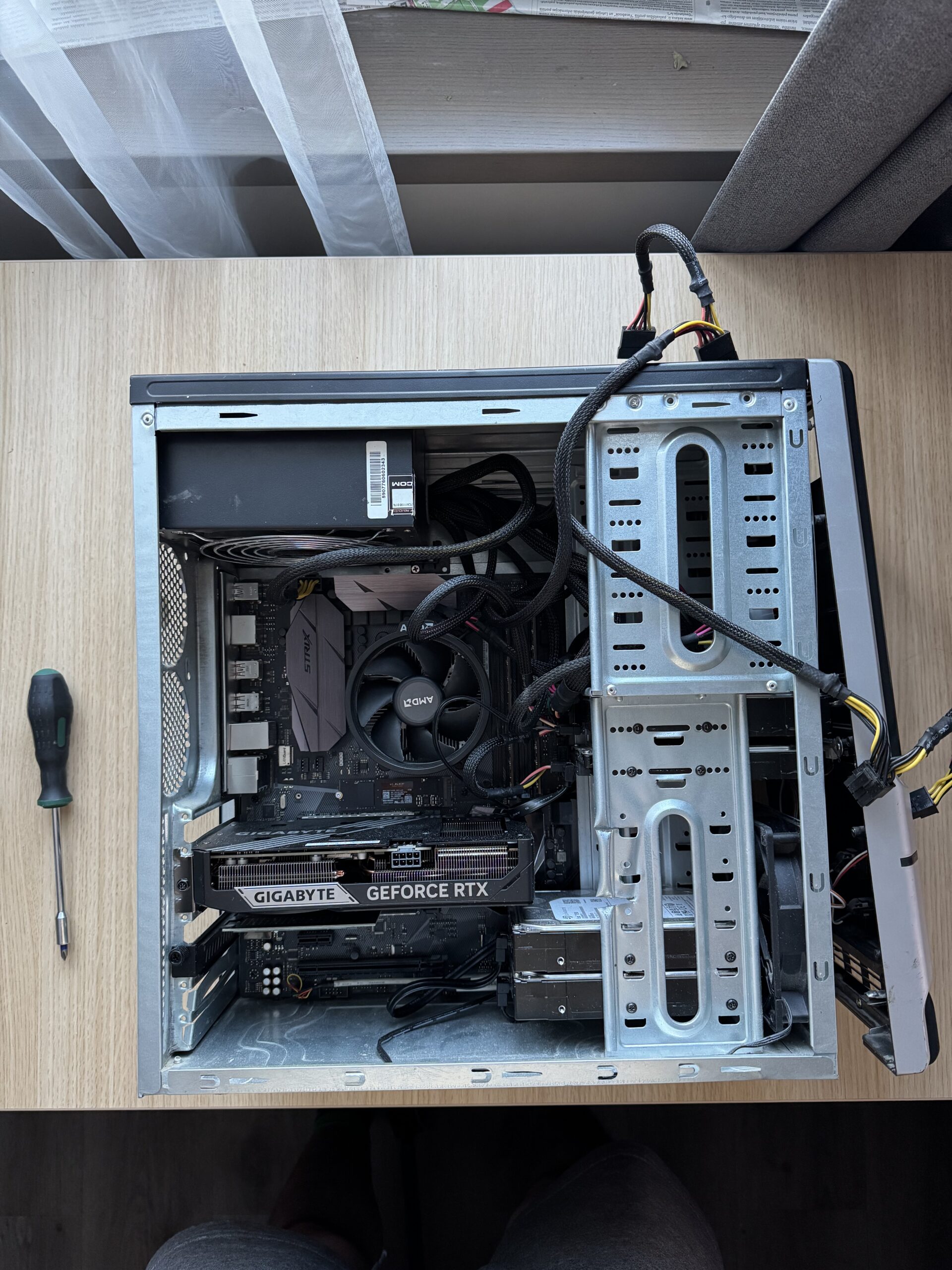
One of my proudest and most useful projects to date is the reason you can read this right now. In summer of 2025 I sourced and built my own home server to have a place to host services, backup data, configure and host virtualization environments and utilize local LLM models. As a server is a computer with dedicated software installed, the choices are very similar to any other computer build, with slight modifications.
The first decision to make was to select software that the whole server will be based on, as that could impact the hardware choices later. There were a couple of viable choices like, TrueNAS, Proxmox, but in the end I decided to go with Unraid. In the end Unraid was the best for my use case as it has a smaller learning curve than the others and the biggest advantage of XFS file system, that I could add drives along the way and them being different sizes. The only negative of this system is that you need to buy a license, compared to the more open-source nature of the other software.
With that out of the way I began to source the hardware parts. The biggest decisions here were based on what CPU platform to go with and if ECC ram was needed for a home server. I ended up choosing a Ryzen AM4 based system as it unofficially supports EEC ram on some motherboards. The big disadvantage by not going with Intel based system was the lack of integrated graphics on the CPU that would mean very efficient video encoding and not needing a dedicated GPU (at least at the beginning).
I found a used computer with a Ryzen 1600x. Unfortunately, the ram and the motherboard itself ended up not matching my needs, as they were consumer grade. Luckily, my own PC was AM4 based and with an ASUS motherboard that did support EEC memory. This memory I would end up buying from Ebay, 32gb in total. Tested the memory with a memtest for multiple hours without any errors.
For the storage needs I ended up getting three 8tb exos hard drives and SSD as a cache. I set up one of the hard drives as parity, in case a drive failed I would keep all of my data.
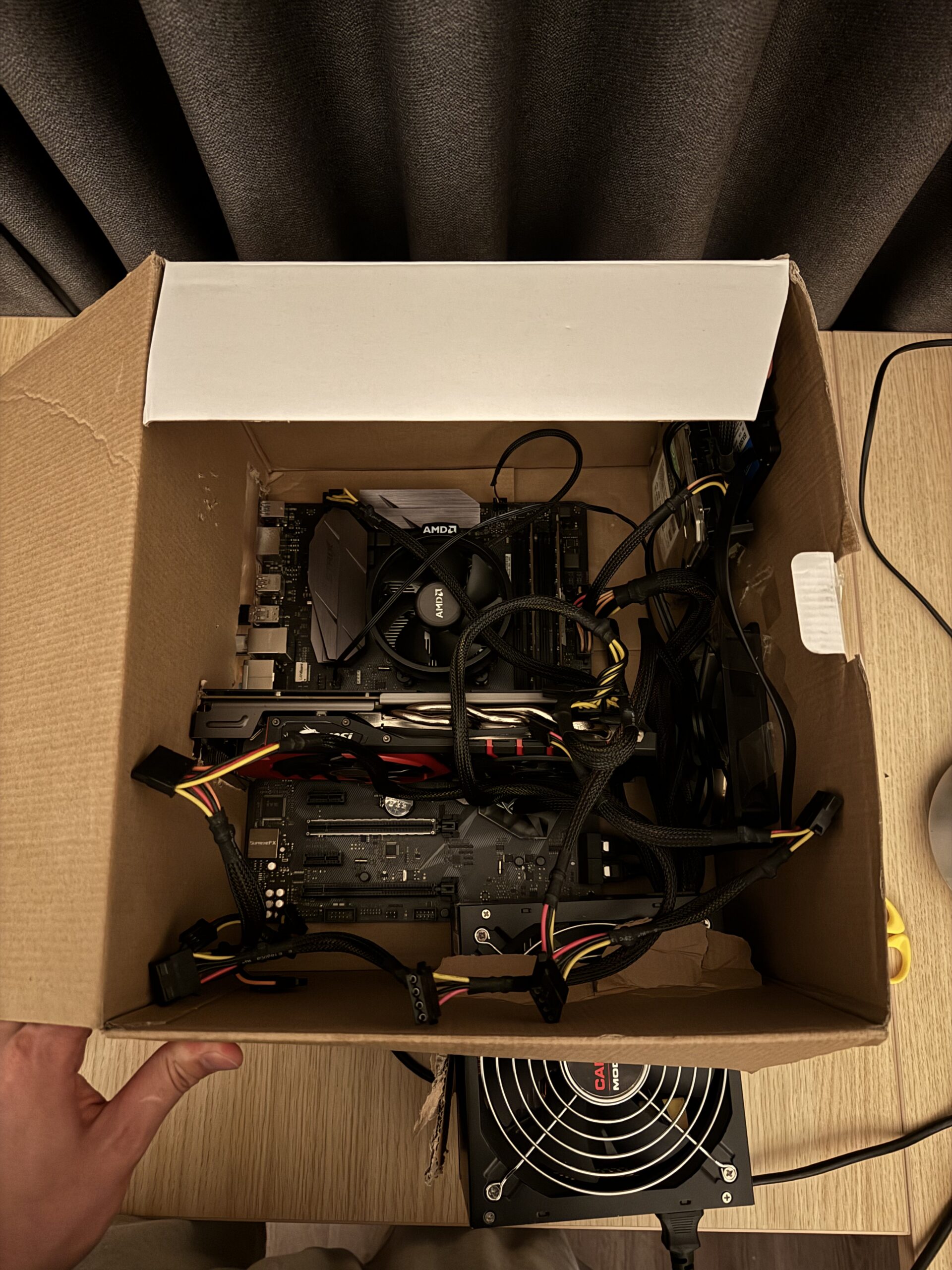
Initially as I do not have a big enough pc case, I built the server in a cardboard box for testing. Good thing about cardboard – does not conduct electricity.
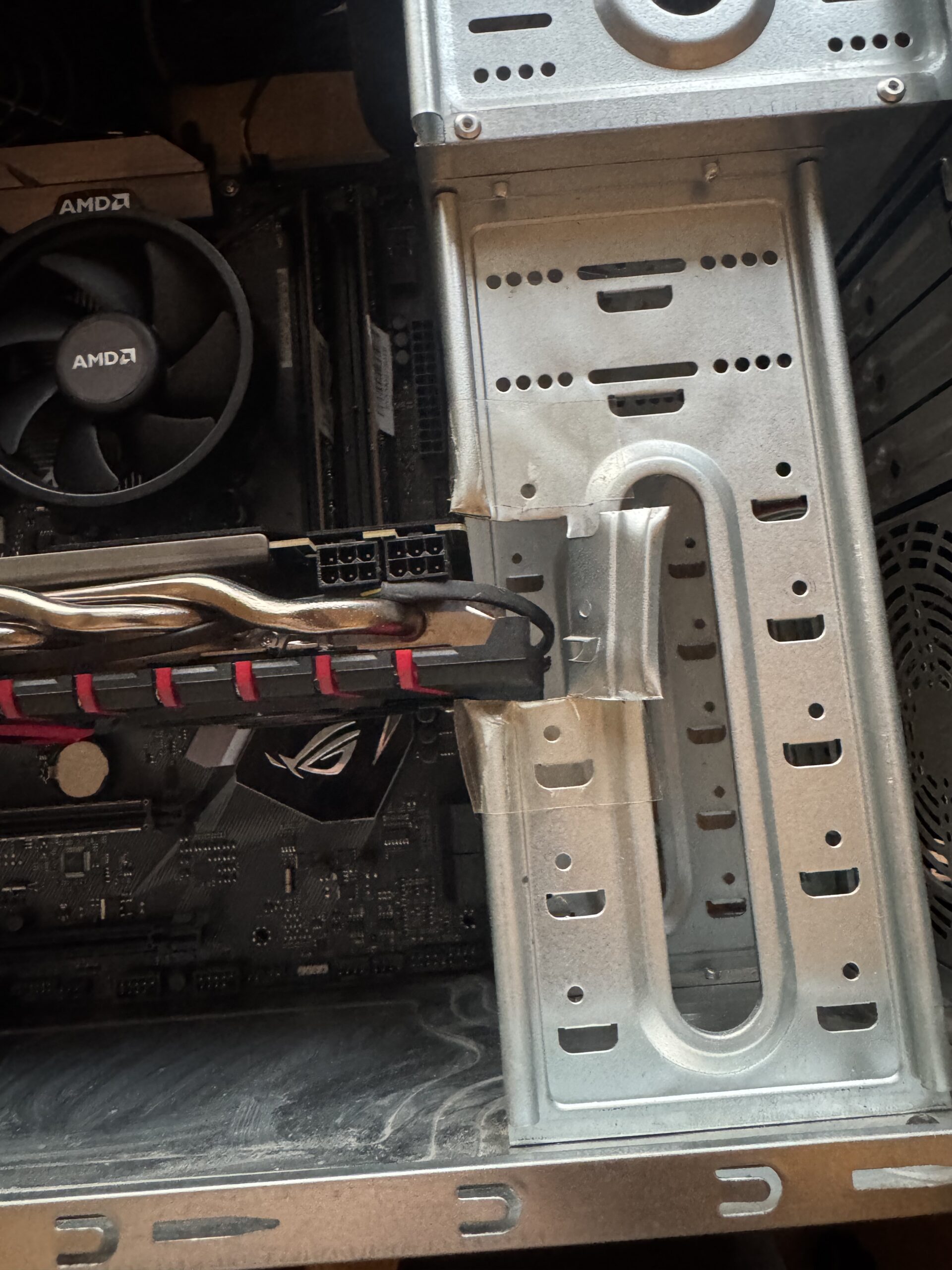
Later I got it “fitted” into a case and started using it.
For better video transcoding and for the purposes of local LLM usage, I upgraded a couple of parts later on.
Ryzen 1600x was changed to a 5700x, because of a much lower TDP and higher performance. New UPS was installed with great reputation online (XPG VE II) as the server is on 24/7. The cache SSD was changed to two NVME m.2 drives, for faster speeds and having two of them so they could be mirrored for data protection in case of a failure. Most importantly the graphics card was changed to an RTX 5060 ti 16gb version. This would allow me to have very fast acting decent parameter size local LLM to test and use.